
Maria Valtorta
Maria Valtorta was an Italian, Roman Catholic mystic and writer who lived from 1897 to 1961, spending much of her adult life bedridden in Viareggio, Tuscany. She is best known for producing a massive 10-volume narrative of the life of Jesus Christ, The Gospel As Revealed To Me, and other writings compiled into six more published books. Taken together they are what Jesus called the “Work,” which she claimed came from visions, “what I saw”, and dictations.
Her writings are impactful because they offer an intensely detailed and expansive historical portrait of Jesus that draws many readers closer to him, but they are also controversial, as the Catholic Church has officially ruled that her “visions” are not of supernatural origin, without presenting an arguable basis. Meanwhile, that claim is in contrast to the evident theologically, diverse content, within its Jewish/Roman historical complexity and cultural variety as evidenced in Maria’s “Work”, who had no training in areas of Christian and pagan theology, Antiquities, and many other applicable fields of study typically identified as requiring years of expert academic training.
Her Earliest Years
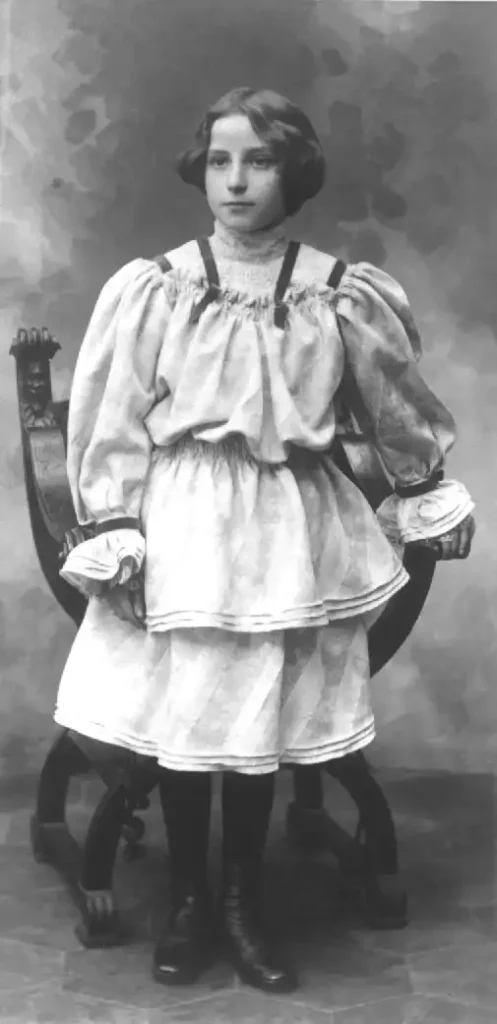
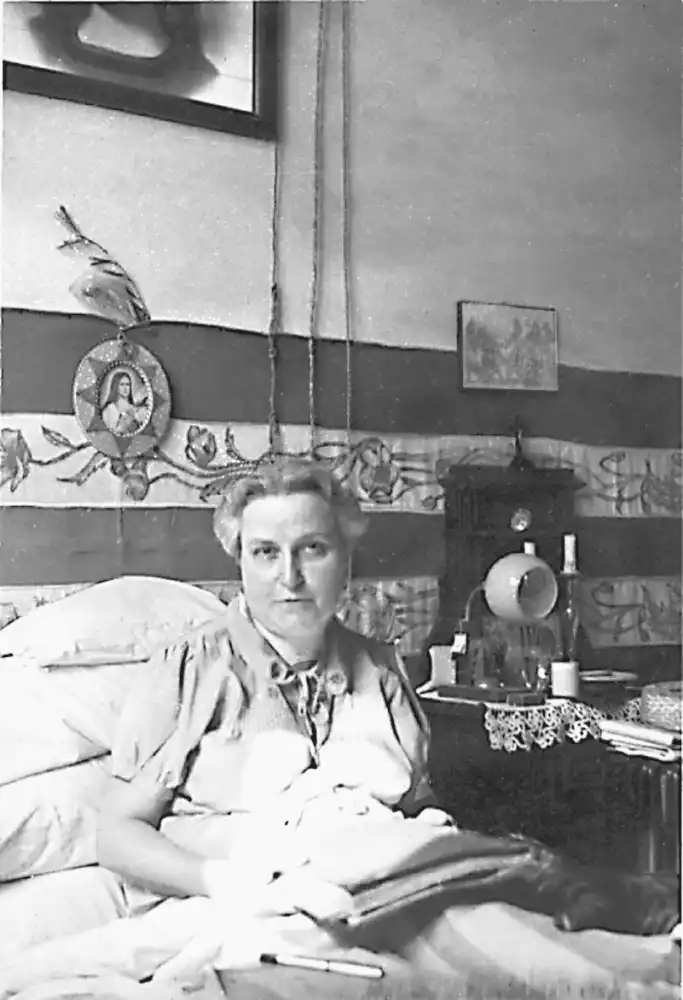
Maria Valtorta was born in Caserta, Italy, in 1897. Her life changed dramatically in 1920 when a young delinquent struck her from behind resulting in an irreparable back injury, an incident that marked the beginning of her long decline in health. By 1933, she was completely bedridden and remained so for the rest of her life.
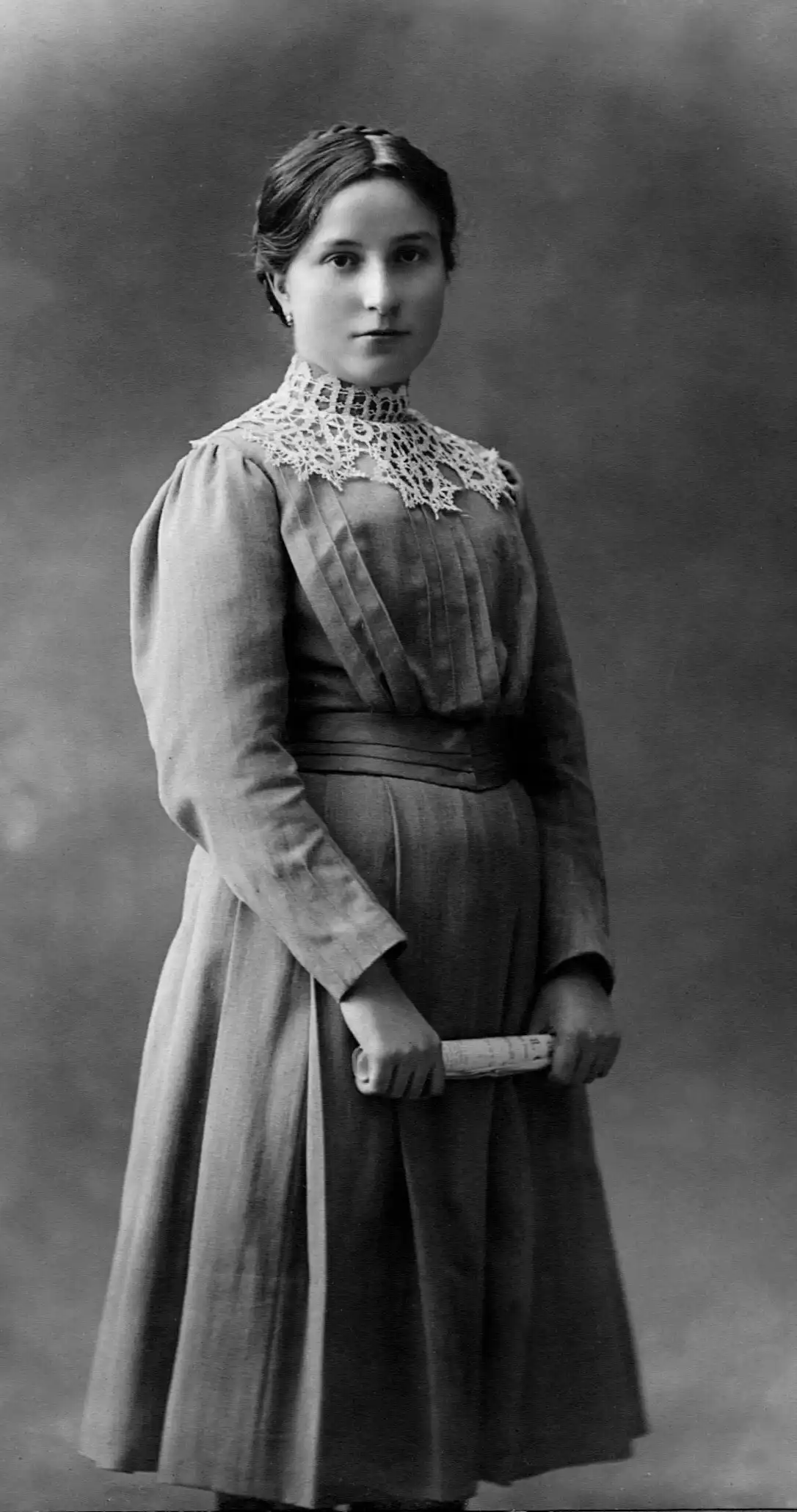
In 1924, her family moved to Viareggio, Tuscany, where she lived most of the time until her death in 1961. She became a member of the Franciscan Third Order and a lay member of the Servants of Mary.
Maria's Writings
Starting on Good Friday in 1943, Maria began writing down what she described as visions and dictations from Jesus and Mary, among others. Her most famous work, originally a five-volume published set, titled The Poem of the Man-God and later as a 10-volume set, retitled The Gospel as Revealed to Me, is a vast narrative at around 5,000 pages that fills in the gaps of the canonical Gospels that St. John refers to at the end of his Gospel: “But there are also many other things which Jesus did; which, if they were written every one, the world itself, I think, would not be able to contain the books that should be written.” Six other books have now been published. All of them compiled from her writings that comprised 17,000 hand-written notebook pages.
The thread of Maria Vlatorta’s writings is simple and straight forward, revolving in ever-expanding concentric circles about God-Love at its center, the heart of the Gospel’s appeal. An apparent complexity is manufactured by the analysis of “experts”, modern rationalists that create tension between popular, heart-felt devotion (let’s call it Faith) and official Church caution, which tension is the outcome of a thinking typical of “worldly” adherence by outspoken members of the Church that so many Catholics view as distant, or out of touch.
Controversy and Reception
Many believers find her writings spiritually powerful because they present the life of Jesus with a level of sensory detail and psychological intimacy that goes far beyond the Canonical Gospels and even the Church Fathers’ commenetaries. Readers report that her vivid depictions of Jesus’ personality, His interactions with the Apostles, sinners of every type, and the cultural setting of first-century Palestine make the Gospel stories immediate and real, in a manner the Canonical Gospels handed down two millennia ago can’t, in part due to their necessary brevity for their times. This has led to a strong grassroots’ following; but her supporters have also included high-profile figures like Pope Pius XII, Padre Pio, etc. who recommended her. For readers like these, the writings function as a powerful tool for meditation, a way to not only encounter Jesus’ Love, but deepen their own, regardless of their initial spiritual state.
The Church’s stance is the critical context for understanding her impact. While her work has been popular, it has also been the subject of significant controversy. It was briefly placed on the Index of Prohibited Books in the 1960s (which Index was later abolished). More recently, in February 2025, the Vatican’s Dicastery for the Doctrine of the Faith issued a definitive clarification. It stated that the alleged “visions” and “revelations” in Valtorta’s writings “cannot be regarded as having a supernatural origin” and should be considered “simply as literary forms that the author used to narrate the life of Jesus Christ in her own way”. In other words, a work of interpretive fiction.
Let the reader decide: if it’s not from God, and so far beyond what a bed-ridden, mortal invalid can write in such theological depth, historical complexity and accuracy, then who is it from? “They” never answer that question. If it is from God, that is, of supernatural, spiritual origin, a prayerful, meditative reader should expect a flowering of faith, hope, and love, THE message and outcome of the authentic Gospel. And many report that’s exactly what happens!
For Catholics this means that her works are not a form of private revelation that must be believed but can be believed as an “inspired” narrative delivered to her by Jesus and the other heavenly personages, who many times claim this fact in Maria Valtorta’s “Work”.
The Church goes further and declares that the faithful should therefore turn away from the “Work” and go back to the canonical Gospels as the sure source of faith. However true, the “Work” also more than confirms the Gospels by its echo. And that was Jesus’ stated purpose, among other reasons, for choosing Maria as His “spokesman”, to make the Gospel accessible and alive again to all those seeking the True God, who want to pierce through the lies of this last age.
An Uncomfortable Premise
In the interests of transparency, an uncomfortable premise must be identified in this About page, which is also an undercurrent throughout Maria’s writings, seeing Jesus’ interactions with the various peoples of Israel, and of all Palestine for the that matter, two millennia ago.
Maria’s writings are clearly what is called “private revelation”. If we write transparently, must we also be honest? Yes. True or Divine revelation, whether private or public, is a form of prophecy. And we are admonished in Scripture, not to despise prophecy (1 Thessalonians 5:20). And what is prophecy? When God speaks to us directly or through an intermediary to avert an Evil or to promote a Good, teaching us thereby through words, or through past, present, or future events; that is prophecy. At Jesus’ presentation in the temple, Simeon prophesied that He would be a contradiction. It is no less true today if Jesus is teaching through Maria as His “spokesman”; it will be divisive. One sign of True prophecy.
If Maria’s writings are prophetic (of a supernatural source, from God directly or indirectly), and the Church declares that they are not supernatural, that is one side of the controversy. If the Church were to declare them supernatural, but they were not, that is the other side of the controversy. Depending on the knowledge and intention of the declarant, either case could be sinful. The word God is not used in the Church’s declaration. So, is the Church off the hook of the controversy? Supernatural could mean the Devil, or it could mean God, or their intermediaries. By stating that Maria’s writings are not supernatural in origin, they are stating that it can not be God, or the Devil for that matter, that is, the source is Maria’s own imagination. By this phrasing, the Church appears to avoid the hook of controversy by equivocating. But this only serves to intensify the controversial nature of the matter, metaphorically repeating the pattern we see during Jesus’ three-year evangelization.
In this context, when we speak of today’s Church, we metaphorically compare it to the church of yesterday, that is the church of Israel at the time of Christ, the Temple and its Mosaic cult. Jesus’ words in the Canonical Gospels and in Maria’s writings declare a bifurcation of belief evidenced then by those practising a mere exteriority of words and forms (rites) and those who practised the spirit of those words within the form. In the end, those of the spirit became the Christians, whether of Jewish or Gentile race. Jesus came for both. The exterior cult of the Temple and Jerusalem were destroyed because it did not receive the Christ.
The uncomfortable premise asked as a question is this: Does today’s visible Church, the one exercising Christian cultic authority, speak with only the exteriority of words, or with the Spirit? The answer to that question can only be decided by each individual reader of Maria’s “Work”.
Therefore, when Church is written here, it refers to the visible entity that legitimately exercises, or does not exercise, God-given authority, and/or the body of simple believers. So here, no judgment is made on that Church when referring to Church. The only purpose of its mention is to identify the prophetic undercurrent presented by writings like Maria’s and to point out the uncomfortable difficulties (contradictions?) for Catholics.
For Peoples of Other Faiths
For non-Christians, Maria Valtorta’s writings at a minimum, bear a theological authority of historical fact that only spiritual Truth can convey. The “Work” offers a window into what should be authentic human piety, the fulfilled promise of the enduring human desire for concrete and detailed understanding of God and His Love and the purpose and end of our existence, which foundation is only built on True Religion. The sheer scale and detail of her work make it a must study for anyone interested in how to understand real Christian faith and most importantly, how to live it, as told by the Author of Life Himself.
In short, Maria Valtorta’s legacy is defined by an apparent contradiction the Catholic Church itself is promoting, that on the one hand, the Canonical Gospels are the sole Truth, while on the other hand, her writings are officially . . . non-supernatural literature . . . Yet, the writings continue to elevate the hearts of many Catholic Christians, Christians of other kinds, and non-Christians alike, who hear the echoes of the Gospels with greater clarity, compelling life-changing motivations, who live in a world that attempts to submerge them, deeper and deeper into uncertain moral and spiritually dead mire. Rather, these writings beckon us unequivocally, to live as God intended us to live from all Eternity, as preparation for the next Life, real Life.
Take the journey . . .
You decide . . .
About Anonymous
Anonymous writes for this website to help bring the Gospel to men again, as it was given by Jesus, personally, intimately to Maria Valtorta; today, it’s just by different means. Jesus, the Word, still speaks to souls. For most people, reading 1,000s of pages is too arduous a task. This website provides less daunting access. Read, listen, meditate, even pray. You and Jesus will find each other.
